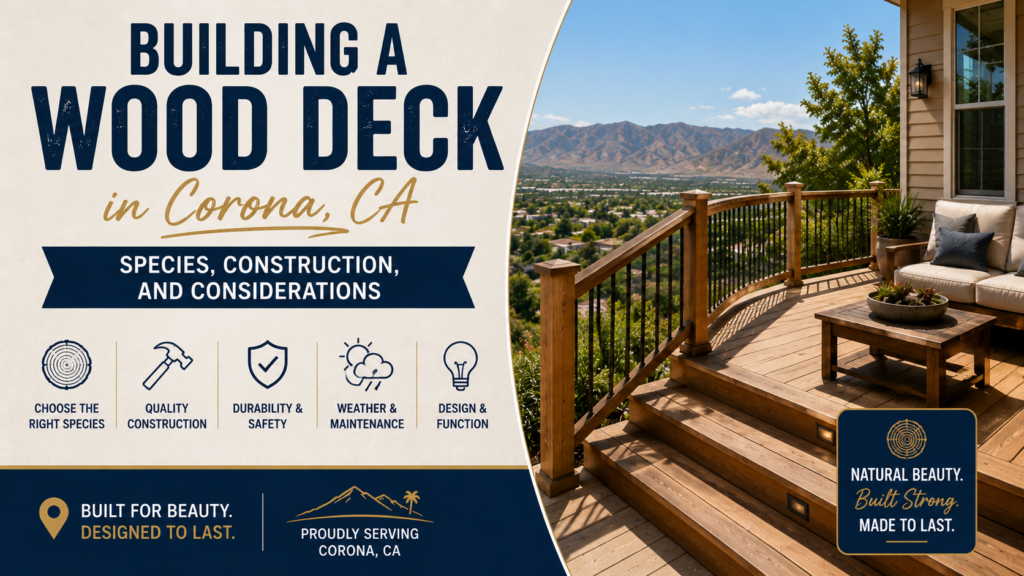
Despite the growing popularity of composite and synthetic decking materials, natural wood remains a widely chosen material for outdoor decks throughout Southern California. Wood decks offer a warmth and authenticity that many homeowners find compelling Handrails the natural grain patterns, the organic texture underfoot, and the way wood ages and weathers all contribute to an aesthetic that manufactured materials can approximate but not fully replicate.
In Corona, California, a Wood Deck Builder Corona can serve as a beautiful extension of a home’s outdoor living space, providing a comfortable platform for entertaining, relaxation, and family activities. The key to a wood deck that performs well over the long term lies in choosing the right species and working with a skilled builder who understands the specific demands of the Southern California climate.
Common Wood Species Used for Decking
Not all wood species are equally suited for outdoor decking applications. The choice of species significantly impacts the deck’s durability, appearance, and maintenance requirements.
Redwood is among the most traditional choices for California decks. Native to the region, redwood contains natural tannins and oils that provide inherent resistance to rot, insects, and decay. It is relatively easy to work with, takes stain well, and produces a rich, warm color that is highly regarded aesthetically.
Cedar is another popular softwood option. While slightly less durable than redwood, cedar is lighter in weight, widely available, and naturally resistant to insects and moisture. It is often chosen for its pleasant aroma and the way it develops a silver-gray patina over time without any treatment.
Pressure-treated lumber Handrails typically pine or fir that has been chemically treated to resist rot and insects Handrails is a common choice for deck framing and structural components due to its cost-effectiveness and durability. It can also be used for deck boards, though it generally requires more frequent maintenance than redwood or cedar to maintain its appearance.
For those willing to invest in premium materials, tropical hardwoods like Ipe, Cumaru, and Garapa offer exceptional durability that can rival composite decking. These species are extremely dense and resistant to rot, insects, and wear. Their natural oils provide a degree of UV protection, and their richly patterned grain creates a striking visual impact.
Wood Deck Maintenance in a Southern California Climate
Maintaining a wood deck in Corona requires regular attention to counteract the effects of intense UV radiation, dry heat, and occasional wet conditions. Without proper care, wood decks can develop surface cracking, splintering, discoloration, and Handrails in areas that retain moisture Handrails rot.
The typical maintenance cycle for a wood deck includes annual cleaning, inspection for any damaged or deteriorating boards, and reapplication of stain or sealant every one to three years depending on the wood species and product used. Staining or sealing serves two purposes: it protects the wood from moisture penetration and UV degradation, and it helps maintain the deck’s color and appearance over time.
Lighter colored stains or transparent sealers tend to perform better in Southern California’s high UV environment, as darker finishes can absorb more heat and accelerate surface breakdown. Homeowners who prefer the silver-gray weathered look of natural wood can allow their deck to gray over time, though this requires accepting that the wood is more exposed to the elements.
Structural Considerations and Building Code
A wood deck, regardless of the species used for the surface boards, relies on a well-designed and properly constructed structural framework. The framing Handrails including posts, beams, joists, and ledger attachment Handrails must be built to support the loads imposed by furniture, people, and environmental factors like wind and seismic activity.
In Corona, deck construction requires a building permit, and the structure must comply with the California Residential Code. This includes requirements for post and beam sizing, joist spacing, ledger attachment to the home, and guardrail and handrail specifications. An experienced wood deck builder will be familiar with these requirements and will ensure that the deck is designed and constructed to pass inspection.